
爱情连连看
Chinese team develops intelligent vision sensor that turns light signals into AI-ready tokens, reducing use of energy_我的网站

一 |
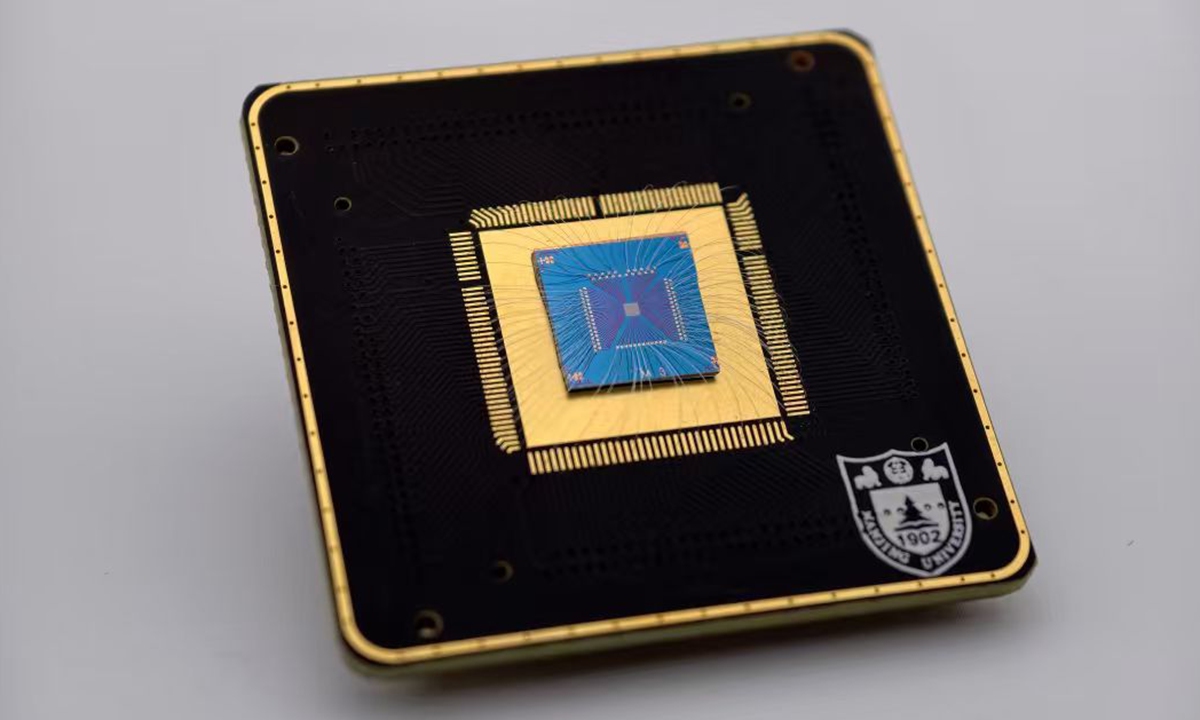
A Chinese research team from Nanjing University has developed a new ultra-low-power intelligent vision sensor chip, dubbed "LightTok," that can convert light signals into tokens within the sensor, significantly reducing the high energy consumption caused by frequent transfers of massive amounts of redundant data, the principal investigator told the Global Times.
According to a release from the Institute of Brain-Inspired Intelligence of Nanjing University, tokens generated by the LightTok chip can be directly fed into a Transformer encoder for image recognition.
"Our design idea was to move token generation onto the sensor itself, allowing the chip to directly produce tokens that AI models can process once light reaches the sensor," Miao Feng, director of the Institute of Brain-Inspired Intelligence at Nanjing University, told the Global Times on Thursday. "These tokens contain complete image information."
Physical AI refers to intelligent systems capable of autonomously perceiving, reasoning, acting and receiving feedback in the real world, representing a key pathway for AI to move from the digital realm into the physical world. Vision-based physical AI systems powered by large AI models need to convert visual information from real-world environments into tokens that can be processed by AI models before feeding these tokens into Transformers for subsequent tasks.
In traditional visual perception pipelines, light signals must go through multiple stages, including image sensing, analog-to-digital conversion, data buffering and transfer, digital image patching and embedding, before being transformed into tokens that AI models can process. The frequent transfer of massive amounts of redundant data has resulted in high energy consumption at the edge, according to a report by Science and Technology Daily.
The LightTok chip directly addresses a key challenge in physical AI hardware: how to efficiently acquire and tokenize visual information from the physical world with low energy consumption, Miao said.
The LightTok chip consists of a photosensitive memory array and peripheral circuits. The team built the array based on single-layer molybdenum disulfide (MoS₂) floating-gate phototransistors, with each pixel capable of sensing light, storing information and performing analog computing. By processing optical information directly within the chip, the device can convert captured visual signals into tokens for AI models, according to the research team.
The current LightTok prototype has a resolution of 32×32 pixels, or 1,024 photosensitive pixels, which is still smaller than that of smartphone cameras and industrial imaging systems. However, Miao said the technology is compatible with CMOS manufacturing processes and can be scaled up. With wafer-level growth of molybdenum disulfide materials, the chip could potentially achieve a scale comparable to existing imaging devices.
Miao said the chip also draws inspiration from the information-processing mechanism of human vision. Similar to how the retina extracts key visual information before transmitting it to the brain, the chip also aims to process visual information at an early stage.
The research was conducted in collaboration with another research team from the National University of Singapore. The findings were published on Wednesday in Nature Sensors, an internationally renowned journal in the field of sensing technology, according to the release.
Potential applications for LightTok include drone systems, autonomous remote sensing and small-scale embodied AI systems, Miao said. In these scenarios, devices need to continuously detect, understand and track targets, generating massive amounts of visual data. By reducing the energy required for visual processing, the technology could extend the operating time of drones, satellites and small robots with limited power supplies, the expert said.
。 本报讯 日前,根据森林防火工作实际,孤竹营子乡做出周密细致的安排部署,严格落实“网格化”管理机制,全员投入森林防火工作中。

二 | 孤竹营子乡党委、政府高度重视,成立森林防火指挥部,做到早安排、早部署,明确森林防火工作重点、关键节点、应急措施等工作内容,要求全乡干部群众统一思想,层层签订防火责任状,确保森林防火工作不留盲点、不留死角,做到万无一失。 孤竹营子乡加大防火工作宣传力度,发放防火相关宣传单1000余份,悬挂宣传条幅50余面、森林防火旗帜400面,出动防火宣传车490台次,对已损坏的防火标牌进行了补充,并有专人负责看管。设立森林防火瞭望哨45个,进山路口检查站3个。 截至目前,全乡已投入森林防火资金15万元,主要用于防火宣传、机具维修、物资储备、车辆维护、燃油防火人员培训,演练及启用村防火人员工资等。 孤竹营子乡全体乡村干部54人,每天坚持到责任区域防火,半专业化扑火队员16人、临时防火队员50人已全部落实到位,并进行了三次专业化培训。森林防火物资齐备,车辆及机具完好,扑火队员处于高度戒备状态,24小时待命,每天不间断巡查。

三 | (顾光伟)。

四 |
Current article:http://www.jiubengtaibingpengou.pics/8d83/2nthgl.doc
Published on:18:39:08
 闽江潮涌纳百川 有福之州聚英才
 SK 集团会长警示内存高价风险:芯片通胀或将冲击消费电子
 科学“种”进了更多人心田
 中文传媒:拟以自有资金对蓝海国投进行增资,增资金额为3亿元
 为期三年!工信部等六部门部署全面开展绿色建材下乡活动
 NHRC advisory on ocular trauma
我的网站最新内容
- ·终极对决!西班牙VS阿根廷,谁能夺冠?
- ·中央气象台发布强对流天气预报:内蒙古、吉林、宁夏、山西、河北、北京、山东、安徽、江苏、湖北、湖南、江西、浙江等地将有短时强降水
- ·印军将领脱下军装后,才敢公开说真话,但他还是低估了中印差距,尖锋视野,原创 印军将领脱下军装后,才敢公开说真话,但他还是低估了中印差距
- ·West Has Unleashed Information War Against India for New Delhi's Stance on Ukraine, Experts Say
- ·Delhi Flood Alert: डूबेगी दिल्ली! शहर में बाढ़ की चेतावनी, यमुना का जलस्तर खतरे के निशान से ऊपर
- ·7 killed as a suspected migrant-smuggling vehicle crashes in southern Germany
- ·海峡两岸医院院长共话医疗韧性发展
- ·情暖八一 微光送爱——九江、景德镇两地开展“微光行动”慰问退役军人
- ·全面开展电视“套娃”收费乱象治理,“电视自由”正在回归!
- ·首轮融资狂揽超9亿美元!小鹏机器人爆火:估值已超63亿美元
- ·抖音平台美美壳数码工坊售无合格证手机壳要求退一赔三
- ·女子感冒医院输错药身亡?官方回应:已介入调查
- ·云南鲁甸逾12万亩苹果丰产热销国内外,云南鲁甸逾12万亩苹果丰产热销国内外
- ·中国女篮奔赴海外拉练 备战2022女篮世界杯
- ·携手尤文第十个赛季,百岁山怎样把用户目光从赛场拉向自身?
- ·霍里:这是哈登最后一份合同了 但骑士目前的阵容无法帮他夺冠
我的网站热点内容
- ·把地沟油变为航油,这家公司做到了!| 1109 张博划重点
- ·这依然是最好的巩立姣
- ·《Exquisite Corpses》:狐面杀手呈献血染漫画史诗
- ·中国第16次北冰洋考察队完成全部冰站调查
- ·111222
- ·赢麻了!张本智和独揽27万奖金,国乒4人合计14万
- ·4th Vande Bharat Express will connect Himachal to Delhi
- ·New archives on notorious Unit 731 reveal Japanese military’s cover-up of biological warfare
- ·黄山市委常委、秘书长、政法委书记、市公安局局长伍春宏,履新职
- ·消息称 Bose QuietComfort 第二代头戴式降噪耳机 8 月发布
- ·琼斯社媒复盘:过早追求安稳 本身就是最大风险
- ·微软回应必应搜索推广工具争议:不会自动安装,更改设置需用户同意
- ·中美之间为何需要1.5轨对话?
- ·3 dead after a shooting at a party at a Denver industrial storefront
- ·水利部:华北地下水超采治理取得明显成效
- ·中超联赛第十轮:首阶段收官战 津门虎要重塑信心