A | Sputnik spoke with Professor N.R. Bhanumurthy, a prominent economist and vice-chancellor of the Dr. B.R. Ambedkar School of Economics University, Bengaluru (BASE University), about the decision to allow trade settlements in rupees and its impact.,Sputnik: What prompted the RBI to launch trade settlements in rupees?,Prof. Bhanumurthy: It is mostly to do with managing foreign exchange issues, especially when there are some shocks from the global financial system.,India must have smooth trade settlements since it has been trading with multiple countries.,There was a proposal to raise rupee-denominated bonds outside the country, which is also part of the transition.,So, it has a long-term strategy of the rupee also becoming one of the currencies of the international basket. Right now, we have only five recognized currencies. The latest currency added to the list was China's yuan. So, this is part of India's long-term mission.,Sputnik: Will this step help India resume sanctions-proof trade with countries like Iran, Venezuela, and Russia?,Prof. Bhanumurthy: We already have rupee-denominated trade with Iran, especially oil bills being settled in rupees. The Reserve Bank of India's decision is only to showcase that India is also emerging as a big player in the foreign exchange market.,This is only the beginning of the long process where India would like to see the rupee as one of the international currencies. In the process, all these things — like countries with a problem with foreign exchange reserves, nations with trade sanctions — all these will be taken care of.,In the future, disturbance or volatility in the foreign exchange market will increase, especially what we see in Russia or what we see in China. All those things will start having their own repercussions on the forex markets. So, it's better for India floating its currency-based trade.,Sputnik: Would other countries be interested in trading in national currencies with India?,Prof. Bhanumurthy: Certainly yes, because right now India's trade links are increasing, especially in the service sector; our trading links are expanding in a big way. There will be a much greater increase in the volumes of rupee trade. So if countries start trading through the rupee, business costs will be reduced.,India has signed an agreement with the UAE for rupee-based trade. Venezuela has also expressed interest.,Sputnik: How would this impact trade in the dollar or India's foreign exchange reserves?,Prof. Bhanumurthy: Foreign exchange reserves, which are currently around $600 billion, are not entirely in US dollars. A certain proportion of this is in US dollars, while the amount is also in euros, British pounds, and gold. So, I do not think rupee trade will impact trade volumes in the dollar. Whichever countries do not have a rupee-denominated trade deal with India, they can choose to settle their transactions in dollars. So, the dollar trade is still there.,Some areas where India is a significant trader, e.g. the European Union, and other countries like the UK is one country where we also have good trade relationships, and they are not part of the euro now. So all these things will help in increasing the rupee trade.,However, it does not mean it will negatively impact US dollar trade. They will actually complement each other. 10 years back, India used to settle most of its trade in US dollars. Now it also pays in euros, British pounds, as well as in Japanese yen.,Sputnik: Will it benefit countries in South Asia or other parts of the world facing foreign exchange crises?,Prof. Bhanumurthy: It is possible. Ultimately, every country would like to trade. If the US dollar becomes too expensive, it creates trouble for countries with a forex crisis to trade. In that situation, countries with limited foreign exchange reserves can always explore rupee-denominated trade. That is undoubtedly an area where India can take advantage.,Sputnik: Could India face US anger in some sense?,Prof. Bhanumurthy: I doubt all this can happen. We are sitting with a substantial foreign exchange reserve. If that were the case, China would have faced retaliation long back.,Retaliation options are very limited in forex markets. Productivity is one thing everybody can compete for; the rest is only settlement. Countries can only compete in productivity.,Et Tu? US Steals Most of Australia's Sale to China Amid Trade Row, Finds Study30 November 2021, 08:15 GMT,Sputnik: What should India do to strengthen the chances of making the Indian rupee a global currency?,Prof. Bhanumurthy: Productivity is a significant factor that can boost India's ambition to enhance its rupee-denominated trade. So, we need to keep improving our productivity. Second, India needs to create infrastructure to start having short-term trading in the foreign exchange market. Some countries that trade with the rupee also need to have a kind of transaction in a foreign exchange market.,The exchange rate becomes an important variable for those countries trading in the Indian rupee. So there should be some foreign exchange market institutions, and the Indian Central Bank should also be in a position to address any risk associated with other countries, wherever the rupee foreign exchange reserves are.,Any global currency possesses some characteristics — character India needs to ensure so that the Indian rupee will become a global currency.。

B |

C |  产品原理为在玻璃里加入太阳能电池组件, 当太阳光照射电池组件上的半导体 PN 结时, 就会在 PN 结的两边出现电压,产生电流,太阳能电池就开始工作,为车提供能源。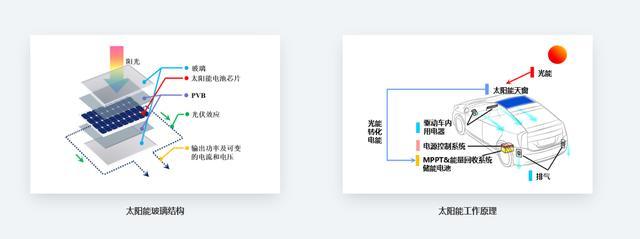
 根据官方视频介绍,产品每平方米可输出 150W 电量,能够为多类车载电器稳定供电。可保障通风系统持续运转,维持车内空气流通;不间断支撑车联网工作,保障车辆对外通讯;还可实时为行车记录仪供电,实现 24 小时车辆安防监控。IT之家注意到,早在今年 3 月 27 日,福耀玻璃在互动平台回答投资者提问时表示,公司在太阳能技术与汽车应用融合领域已取得实质性进展。

D | 公司开发出集成太阳能电池组件的太阳能天窗玻璃,通过在玻璃夹层中加入太阳能电池组件,将太阳能转化为电能,为车载电器提供辅助用电,目前,公司已具备太阳能天窗玻璃的量产能力。
Current article:http://www.jiubengtaibingpengou.pics/txjw7/pgit.pptx
Published on:08:35:53